Let me preface my proposal with a short anecdote which only covers a mere three years and two months of my life but still averages out to roughly 14% of my total time on Earth.
I work for SFSU Housing. And you know this already. Because when you work for SFSU Housing, you bring it up at every time it is even minutely relevant. Because it is where you live, where you work, where you eat, where you go to school. It is a mile wide bubble that you learn to conduct all of your daily business in, and rarely do you leave the bubble. Thus the things in the bubble become fiercely important to you.
Even your garbage.
My specific floor has two rooms in the lobby. One for trash and one for recycling. And I can I tell the entire state of my floor by how those two rooms are kept. I know when rooms haven't been around because the trash room is bare. I know who has been breaking policy by the number of alcohol bottles nestled in the bottom of the recycle bin. My residents fall just short of calling me a sociopath in the way I can evaluate their lives by the jenga game peeking out from the top of their trash bin.
Garbage tells me what my residents can't or don't even realize themselves yet.
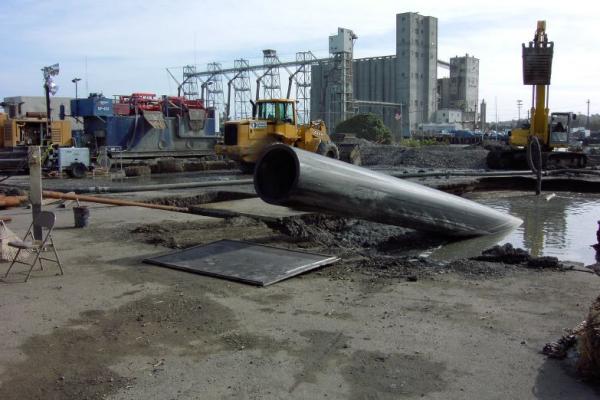
Islais Creek is similar in that it cannot tell us what is happening to it, it can only show us. Both by the refuse being left behind by companies or individuals, but also what 'waste' the creek itself is making in excess.
For my midterm project I would like to catalog the waste in a particular subsection (to be determined with my group, as I missed last week because I could not get over this flu) of Islais Creek. We would categorize the types of waste we find, also documenting its surroundings, and discover if we are ignoring 'hidden populations' along the Islais Creek. (Such a case is documented here.)
Islais Creek has garbage in it's history:
"In the late-1800s what’s now called Bayview emerged as Butchertown, an epicenter of slaughterhouses. The creek was used to carry offal into the bay. Soon the water became polluted. Landfill and heavy industries followed. Islais Creek became narrower and filthier. By the 1950s, automobile scrap yards littered the area and the City was releasing untreated sewage into the channel, which had become known colloquially as Shit Creek. Two hundred years ago the creek’s mouth was two miles wide. Now it’s roughly the length of a city block." -Neighborhood NewswireIslais, then, cannot be understood fully, without taking into account the effect garbage has had on its development, decline, and present day state. By analyzing the refuse both left and created in this creek, we can create a view of Islais as has been directly shaped by man.
Example Infographics on Garbage:


No comments:
Post a Comment